


Why Is There So Much Confusion About Tuk-Tuk Legality?
Confusion arises from three main issues:
- Public statements made without reference to existing law
- Mixing up national Sri Lankan driving licence categories with International Driving Permit categories
- Misunderstanding the difference between the 1949 Geneva Convention and the 1968 Vienna Convention
This has led to inconsistent enforcement and incorrect claims that tourists cannot drive tuk-tuks. The law itself, however, is clear and unchanged.
Misinformation, Market Anxiety, and the Global Shift in Tourism
The current wave of confusion and misinformation surrounding foreigners driving tuk-tuks in Sri Lanka does not arise in isolation. Much of it is being amplified online by segments of the traditional chauffeur-guide and tourism taxi sector, a trend that reflects wider changes taking place in global tourism rather than any genuine legal uncertainty.
For many years, Sri Lanka’s tourism mobility landscape was built primarily around pre-arranged transport: airport transfers, chauffeur-driven tours, fixed itineraries, and commission-based stopovers. This model worked well for a long time and continues to play an important role. However, worldwide travel behaviour has been steadily evolving.
Across virtually all major tourism destinations, there has been a clear and sustained shift toward:
- Independent and self-drive travel
- Adventure and road-trip tourism
- Slow travel and longer stays
- Community-based and sustainable tourism experiences that allow visitors to engage more directly with local life
These trends are widely documented in international tourism research and are driven by increased access to online information, digital travel platforms, and a growing desire among travellers for flexibility, authenticity, and meaningful engagement with the places they visit.
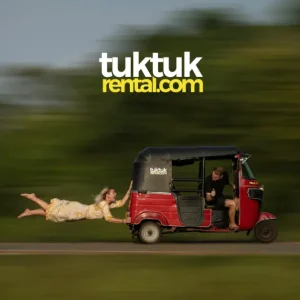
Self-drive tuk-tuk tourism fits squarely within this global movement. It allows visitors to explore beyond the main tourist corridors, travel at modest, low-risk speeds, and engage directly with village economies, family-run businesses, and local communities. It is not an anomaly, but rather a local expression of a worldwide shift toward freer, more experiential forms of travel.
As travel behaviour evolves, some long-established sectors inevitably feel pressure to adapt. In that environment, oversimplified or incorrect claims can spread easily, particularly on social media, creating unnecessary anxiety among tourists and local stakeholders alike.
What is essential, therefore, is that public discussion around self-drive tourism in Sri Lanka remains grounded in verified facts, established law, and Sri Lanka’s long-standing international obligations. When legal clarity is allowed to guide the conversation, it becomes clear that self-drive tuk-tuk tourism, when carried out within the existing regulatory framework, is not a risk to the industry. It is a complementary evolution that broadens Sri Lanka’s appeal and strengthens community-level participation in tourism.
For a country so deeply reliant on tourism, embracing diverse, lawful travel models is not only sensible; it is essential for long-term resilience, international competitiveness, and the continued growth of a visitor economy that benefits both travellers and Sri Lankan communities alike.
The International Legal Foundation: The 1949 Geneva Convention
Sri Lanka became a Contracting Party to the 1949 Geneva Convention on Road Traffic in 1957. This Convention governs how countries recognise foreign driving licences and International Driving Permits.
Under this Convention, an International Driving Permit is a standardized international translation of a driver’s national licence and must be recognized by all Contracting Parties.
Vehicle Categories Under the 1949 Convention
The Convention defines the following relevant vehicle categories:
Category A: Motorcycles with or without sidecars, invalid carriages, and three-wheeled motor vehicles with an unladen weight not exceeding 400 kg.
Category B: Motor vehicles used for the transport of passengers with up to 8 seats (excluding driver), and light goods vehicles up to 3,500 kg.
Tuk-tuks (motor tricycles) clearly fall under Category A and Category B. Therefore, a tourist holding an IDP endorsed with A or B is legally entitled to operate a tuk-tuk.
This has been confirmed with us through the Fédération Internationale de l’Automobile.
How International Law Became Sri Lankan Law: The 1958 Gazette
Sri Lanka formally incorporated the 1949 Geneva Convention into domestic law through:
Ceylon Government Gazette (Extraordinary) No. 11,603 of 28 November 1958
This Gazette:
- Grants domestic legal force to the Geneva Convention
- Designates the Automobile Association of Ceylon (AAC) as a prescribed association
- Authorises both the AAC and the Commissioner of Motor Traffic to issue Covering Permits
- States that a foreign driver holding a valid IDP with a Covering Permit is deemed to be licensed under Sri Lankan law
This Gazette has never been repealed and remains fully valid today.
What Is a Covering Permit?
A Covering Permit is a local administrative endorsement confirming that a foreign driver’s International Driving Permit is recognised in Sri Lanka.
It does not replace the IDP, but it validates it locally for road use.
It can be issued by:
- The Automobile Association of Ceylon (AAC)
- The Department of Motor Traffic (DMT)
The 2009 Motor Traffic Act Amendment Explained
In 2009, Sri Lanka amended the Motor Traffic Act to reference Article 41 of the 1968 Vienna Convention.
Important facts:
- Sri Lanka is NOT a Contracting Party to the 1968 Vienna Convention
- The reference in the Act is a domestic administrative reference only
- This amendment did not repeal the 1958 Gazette
Therefore:
- 1949 Geneva Convention remains the governing treaty
- The 1958 Gazette remains the controlling domestic law
Why the 2011 Vienna IDP Changes Do NOT Apply to Sri Lanka
In 2011, the Vienna Convention introduced new licence sub-categories such as B1.
However:
- Sri Lanka never adopted the 2011 Vienna amendments into law
- The Sri Lankan Motor Traffic Act still reflects the pre-2011 structure
- Therefore, under Sri Lankan law, A and B remain the applicable IDP categories for tuk-tuks
Is the Department of Motor Traffic Allowed to Issue Temporary Licences?
Yes. Under Section 132 of the Motor Traffic Act, the Commissioner-General of Motor Traffic is empowered to issue:
“A temporary driving licence to any person who satisfies the Commissioner that he is a bona fide visitor to Sri Lanka.”
This power:
- Does NOT require an IDP
- Does NOT require a medical test
- Does NOT require a practical exam
Therefore, the DMT legally can issue temporary licences to visitors if it chooses to exercise that authority.
The Current Legal Position (Clear & Final)
A foreign tourist may legally drive a tuk-tuk in Sri Lanka if they hold:
- A valid national driving licence
- A valid International Driving Permit (IDP)
- A valid Sri Lankan Covering Permit issued by the AAC or DMT
Under Sri Lankan law:
- 1949 IDP requires Category A or B
- 1968 Vienna IDP (pre-2011 format) also recognises A or B
In all cases, the Covering Permit remains the mandatory local authorisation.
Why Sri Lanka Must Continue Recognising IDPs
If Sri Lanka were to withdraw from the 1949 Geneva Convention:
- Sri Lankan IDPs would lose international recognition
- Sri Lankan drivers would lose driving rights abroad
- Tens of thousands of foreign tourists would be affected
If Sri Lanka ever accedes to the 1968 Vienna Convention, it would require:
- Full road sign harmonisation
- Updated driver testing standards
- Infrastructure and enforcement upgrades
- Multi-billion-rupee implementation costs
Final Conclusion
The law is settled.
Tourists are legally permitted to drive tuk-tuks in Sri Lanka when they possess a valid International Driving Permit together with a Sri Lankan Covering Permit issued under Gazette No. 11,603 of 1958.
This is not a loophole. This is the law as enacted by Parliament, confirmed by treaty, and applied for over six decades.